

 James North
This post contains affiliate links, so we may earn a small commission when you make a purchase through links on our site at no additional cost to you.
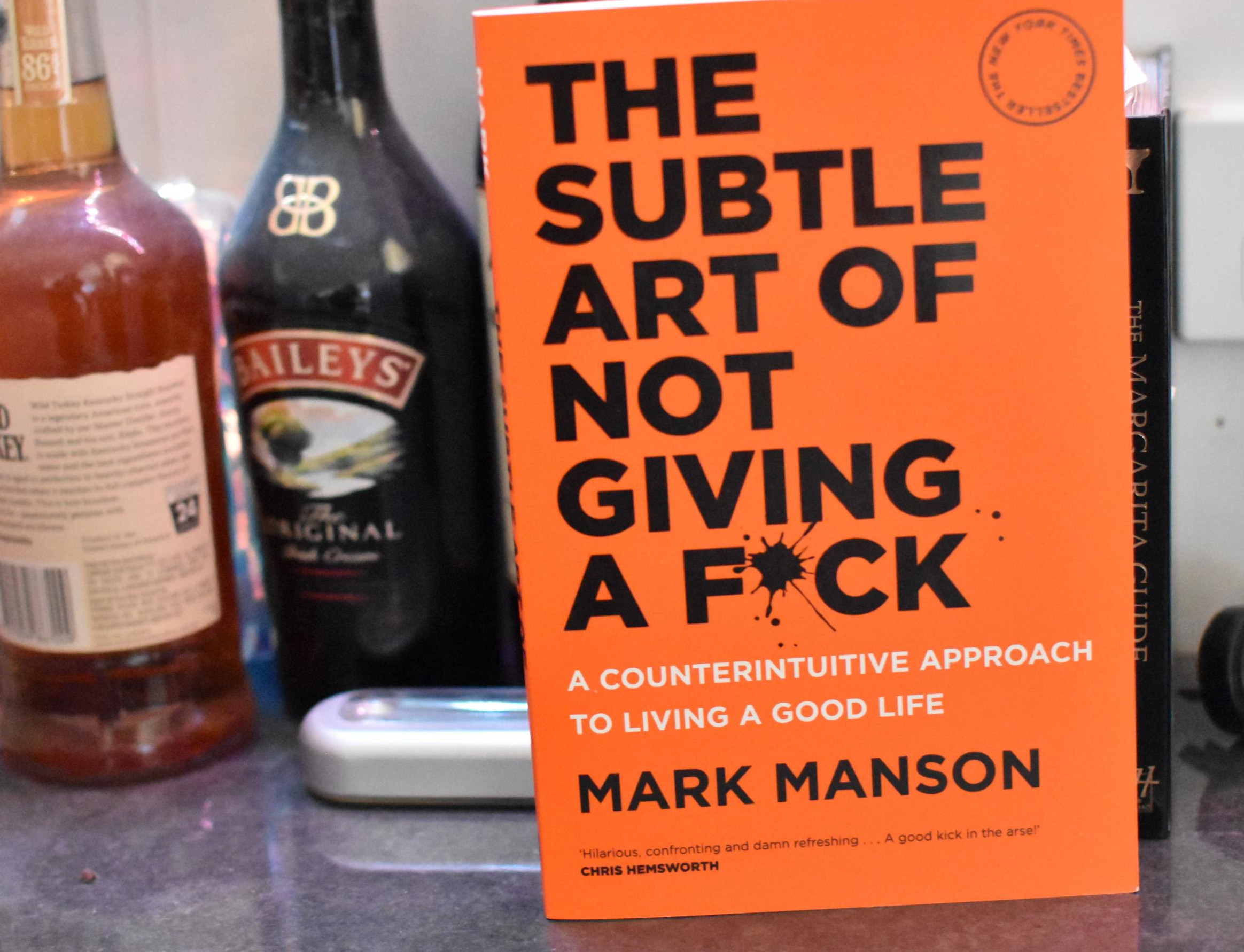
Mark Manson’s The Subtle Art of Not Giving a F*ck (henceforth referred to as “TSAONGAF”) is…an unusual book. Especially if you’ve read a few self-help books like I have. It rebels against the norms of the western self-help industry and focuses on seeing things as they are rather than as we would wish them to be. TSAONGAF is not like the other girls. You won’t find empty platitudes and “affirmations” in this book. This isn’t a book that will tell you that everyone is special. Instead, Manson will tell you that we’re all very similar and mundane, and we all want basically the same things out of life. It won’t tell you to trust your gut; it’ll tell you to actively think about what you’re doing and why. This book won’t sugar-coat things, and it won’t dress its prose up in pretty language. Actually, it will fling curses at you and talk about how f*cked up everything is. TSAONGAF is a well-researched book with a lot of great storytelling and its advice is backed by science and studies.
It’s also the best non-fiction book I’ve read in quite a while.
This book, at the outset, is rebellious, and as you’ll learn, Mark Manson has also always been rebellious. Instead of telling you to focus on the good things, Manson says that it’s only when we recognise things are f*cked up and how they’re f*cked up that we can begin to change them. Ignoring things you don’t like doesn’t make them go away, and it doesn’t really make you happier. You can run away from things you don’t like all you want, but just looking away won’t solve anything.
Most people believe that if they could just solve a few of their big problems, they’d be able to relax and be happy. This book suggests that happiness actually comes from the process of solving problems, so it becomes very important to choose what problems you’re solving, as they are directly correlated to your happiness. When you run out of problems, you need to find new ones.
The most profound insight for me was this passage:
“The desire for more positive experience is itself a negative experience. And, paradoxically, the acceptance of one’s negative experience is in itself a positive experience.”
This book is not at all what it seems. If you, like me, saw the title and thought this was a book about how you can stop caring about anything, that’s not what this book is about at all. The book even says that not giving a f*ck about anything is simply not possible; and if it was, it wouldn’t be desirable. Most of us give way too many f*cks about everything; especially the people who want to be perceived as being ambivalent. Instead, this book suggests that what we should focus on is giving only a limited number of f*cks about what really matters to us and what is good for us, and dropping everything else. It’s simple, but not easy.
Manson tells the story of a Japanese soldier from the 1940s who continued to fight for decades after he was told the war ended. He refused to believe that Japan had really surrendered; his last order was to continue fighting, so that was what he did. He lived in a jungle in the Philippines, subsisting off whatever would pass as food and attacking any locals that would come his way. His life sucked. He lived like this because his value—fighting to the bitter end—was more important than anything else to him. When he eventually did return to Japan many years later after he had finally accepted the war had ended, he said that he was far more unhappy there as a mini-celebrity knowing what Japan had become than he was in the jungle when he believed the empire was still as it was.
But really, this soldier had a shitty value, and because he prioritised it over everything else, it destroyed his life. We would do well to consider what our values are; because we do have them, even if we aren’t consciously aware of them. Are they useful values? Or do they just lead us to dead-ends? If it was really important to you to be popular, that would make your happiness contingent on how other people felt about you. Making yourself responsible for other people’s emotions and opinions does not seem like a particularly great way to live your life to me.
The Subtle Art of Not Giving a F*ck is available as an audiobook, and it's a f*cking great way to experience it.
You should buy the Audiobook on Libro.fm instead of Audible! The author will get waaaaaay more money, and you get a DRM-free copy of the book that Audible can't take away from you if it feels like it. Click here or the image below to join up with Libro.fm today.
There are many, many great stories in this book. I’m a heavy reader of fiction and history, so I found these stories which are interspersed throughout the chapters to demonstrate what Manson is talking about to be very compelling. They’re parables, really.
Manson also dares to claim that complete confidence in yourself and absolute certainty are actually not good things at all. A few decades ago, it was believed that self-esteem was the key to happiness and success; but in the end, it was discovered that there was no real link between self-esteem and success or happiness. If you think about it, some of the worst people in the world are completely certain about their beliefs; racists, dictators, … politicians. They don’t doubt themselves and rarely see themselves as the bad guy.
Actually, it turns out doubting yourself is healthy! Once in a while, it pays to examine your beliefs and your actions to see if you’re really in the right. If you are, carry on; but if you aren’t, it’s time to make some changes.
Manson also distinguishes between the two types of entitlement in the world; there are those who believe they deserve everything, which most people can easily spot, and there are those who believe that their suffering is particularly special compared to everyone else’s, and they use this as an excuse in many areas of their lives. The truth is, most of the ways people suffer are pretty much the same. Most of us lead pretty boring lives.
There is plenty of good stuff in this book, and I’ve only touched on some of the things I found really useful. Much of it is counter-intuitive, but as near as I can tell, it’s the most honest and accurate self-help book I’ve ever read.
That being said, I did not particularly care for parts of the closing chapter. I disagree with the thesis that death inherently makes life meaningful. I think life makes life meaningful. There are still some good parts to the last chapter, but I just fundamentally disagree with the way Manson approaches the topic.
Aside from that, though, it’s a fantastic book I would recommend to literally anybody who can withstand some foul language. There are a few f*cks thrown around, but the language is actually not that bad, in my opinion. This is the self-help book to end self-help books.
Or, to give it the highest praise:
This is a self-help book that doesn't suck.